
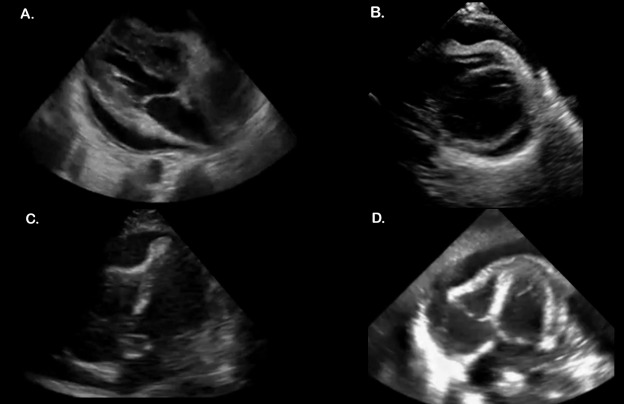
Ultrasound has become one of the most accessible imaging technologies in modern healthcare. Unlike many other diagnostic imaging methods, ultrasound does not require ionizing radiation and can provide real-time information directly at the point of care.
However, one of the long-standing challenges of ultrasound has been its dependence on operator skill. The quality of the examination depends not only on the device itself but also on the user's ability to position the probe, obtain appropriate views, recognize anatomy, and interpret findings correctly.
This operator dependency has influenced how ultrasound services are implemented across healthcare systems. While experienced sonographers and specialists can obtain highly detailed examinations, less experienced users may face difficulties in acquiring diagnostic-quality images.
Artificial intelligence is emerging as a potential solution to reduce some of these challenges. By assisting clinicians during image acquisition, analysis, and interpretation, AI technologies aim to make portable imaging more accessible without removing the need for clinical expertise.
Why Operator Dependency Is a Challenge in Ultrasound
Unlike many automated imaging techniques, ultrasound requires active interaction between the operator and the patient. The clinician must adjust probe position, pressure, angle, depth, and settings while interpreting the image in real time.
Several factors influence ultrasound performance:
- Experience level of the operator
- Understanding of anatomy
- Ability to recognize standard imaging views
- Patient characteristics
- Clinical complexity
- Quality of the equipment
For experienced users, these factors become part of routine practice. However, clinicians who perform ultrasound occasionally may find it challenging to consistently obtain high-quality images.
This challenge is particularly important in emergency medicine, rural healthcare, primary care, and other environments where specialists may not always be available.
AI-assisted ultrasound aims to support clinicians by providing guidance and feedback during the scanning process.
How Artificial Intelligence Supports Ultrasound Acquisition
One of the most promising applications of AI in ultrasound is assisting with image acquisition.
Traditional ultrasound training requires clinicians to learn how to position the probe and identify correct anatomical views. AI systems can analyze the live ultrasound image and provide feedback about image quality, probe orientation, or whether the desired anatomical structure is visible.
For example, an AI system may:
- Recognize whether the correct cardiac view has been obtained
- Provide guidance when probe positioning needs adjustment
- Evaluate image quality before measurement
- Assist inexperienced users in obtaining standardized views
Research in AI-assisted echocardiography has demonstrated that automated guidance systems can help less experienced operators acquire diagnostic cardiac images. Studies have shown that deep-learning guidance can improve the ability of novice users to obtain appropriate echocardiographic views.
These developments are particularly relevant for portable ultrasound, where the goal is often to expand access beyond highly specialized imaging departments.
AI and Image Quality Improvement
Obtaining an image is only the first step. The image must also be suitable for clinical interpretation.
Poor-quality images may result from incorrect probe placement, patient movement, inadequate depth settings, or insufficient visualization of the target structure.
AI-based quality assessment tools can analyze ultrasound images in real time and determine whether the acquired view meets certain technical criteria.
This can help clinicians answer important questions:
- Is the image clear enough for interpretation?
- Is the correct anatomical structure visible?
- Should the probe position be adjusted?
- Is additional scanning required?
By providing immediate feedback, AI may reduce the number of technically inadequate examinations and support more consistent image acquisition.
However, AI-based quality scoring should not be considered a replacement for clinical judgment. A technically acceptable image does not automatically mean that the clinical interpretation is correct.
Automated Measurements and Clinical Support
Another area where AI is developing rapidly is automated measurement.
Ultrasound examinations often involve repetitive measurements, such as:
- Cardiac chamber dimensions
- Ejection fraction estimation
- Bladder volume calculations
- Obstetric measurements
- Vessel diameter assessment
AI algorithms can identify anatomical structures and perform measurements faster than manual methods in certain applications.
The potential benefits include:
- Reduced measurement variability
- Faster workflow
- More consistent documentation
- Assistance for clinicians with limited ultrasound experience
However, automated measurements must still be reviewed by qualified clinicians. Image quality, patient factors, and unusual anatomy can affect algorithm performance.
AI should support interpretation rather than create a situation where clinicians accept automated results without reviewing the underlying images.
AI-Assisted Handheld Ultrasound and Clinical Accessibility
The combination of artificial intelligence and compact imaging devices has created new possibilities for expanding ultrasound access.
Modern Best Handheld Ultrasound AI solutions aim to combine portability with intelligent software features that help clinicians perform focused examinations more efficiently.
Potential applications include:
- Emergency assessment
- Remote healthcare
- Medical education
- Primary care screening
- Bedside monitoring
- Resource-limited environments
For clinicians working outside traditional imaging departments, AI assistance may reduce some technical barriers and help standardize basic examinations.
However, portability and automation do not eliminate the need for appropriate training. Physicians must still understand when ultrasound is indicated, what findings mean, and when additional imaging or specialist evaluation is required.
Can AI Replace Ultrasound Experts?
Despite rapid advances, AI is not expected to replace experienced ultrasound professionals.
Ultrasound interpretation involves more than recognizing patterns. Clinicians integrate imaging findings with patient history, symptoms, physical examination, laboratory results, and disease probability.
AI can assist with specific tasks, but it does not replace the broader clinical reasoning required for diagnosis and treatment decisions.
A more realistic future model is collaboration between clinicians and AI systems:
- AI improves image acquisition
- AI highlights relevant findings
- AI assists measurements
- Clinicians interpret results within the clinical context
This approach can improve efficiency while maintaining human oversight.
Limitations and Challenges of AI in Ultrasound
Although AI offers significant potential, several challenges remain.
Algorithm Validation
AI systems must be tested across different patient populations, clinical environments, and levels of operator experience. Performance in controlled studies may not always reflect real-world conditions.
Understanding Limitations
Clinicians need to know when AI assistance may be unreliable. Algorithms can perform differently when images are affected by unusual anatomy, severe disease, or technical limitations.
Data Security
Many AI systems rely on software platforms, cloud processing, or connected devices. Healthcare organizations must consider patient privacy, cybersecurity, and regulatory requirements.
Training and Workflow Integration
AI tools are most effective when integrated into existing clinical workflows. Poorly designed systems may add complexity instead of improving efficiency.
The Future of AI-Assisted Portable Imaging
Artificial intelligence is likely to become an increasingly important part of ultrasound technology. Future systems may provide more advanced guidance, improved image interpretation, and stronger integration with electronic health records.
However, the success of AI in ultrasound will depend on responsible implementation. The technology must be supported by clinical evidence, appropriate training, transparent performance evaluation, and continued physician oversight.
Conclusion
AI has the potential to reduce some of the operator dependency associated with portable ultrasound by assisting with image acquisition, quality assessment, and automated measurements.
However, AI should be viewed as a supportive technology rather than a replacement for clinical expertise. The most effective future of ultrasound will combine advanced algorithms with trained healthcare professionals who can interpret findings and make informed decisions.
By bringing together portability, intelligent assistance, and clinical judgment, AI-powered ultrasound may help expand access to reliable imaging across a wider range of healthcare environments.
Ultrasound has become one of the most accessible imaging technologies in modern healthcare. Unlike many other diagnostic imaging methods, ultrasound does not require ionizing radiation and can provide real-time information directly at the point of care.
However, one of the long-standing challenges of ultrasound has been its dependence on operator skill. The quality of the examination depends not only on the device itself but also on the user's ability to position the probe, obtain appropriate views, recognize anatomy, and interpret findings correctly.
This operator dependency has influenced how ultrasound services are implemented across healthcare systems. While experienced sonographers and specialists can obtain highly detailed examinations, less experienced users may face difficulties in acquiring diagnostic-quality images.
Artificial intelligence is emerging as a potential solution to reduce some of these challenges. By assisting clinicians during image acquisition, analysis, and interpretation, AI technologies aim to make portable imaging more accessible without removing the need for clinical expertise.
Why Operator Dependency Is a Challenge in Ultrasound
Unlike many automated imaging techniques, ultrasound requires active interaction between the operator and the patient. The clinician must adjust probe position, pressure, angle, depth, and settings while interpreting the image in real time.
Several factors influence ultrasound performance:
- Experience level of the operator
- Understanding of anatomy
- Ability to recognize standard imaging views
- Patient characteristics
- Clinical complexity
- Quality of the equipment
For experienced users, these factors become part of routine practice. However, clinicians who perform ultrasound occasionally may find it challenging to consistently obtain high-quality images.
This challenge is particularly important in emergency medicine, rural healthcare, primary care, and other environments where specialists may not always be available.
AI-assisted ultrasound aims to support clinicians by providing guidance and feedback during the scanning process.
How Artificial Intelligence Supports Ultrasound Acquisition
One of the most promising applications of AI in ultrasound is assisting with image acquisition.
Traditional ultrasound training requires clinicians to learn how to position the probe and identify correct anatomical views. AI systems can analyze the live ultrasound image and provide feedback about image quality, probe orientation, or whether the desired anatomical structure is visible.
For example, an AI system may:
- Recognize whether the correct cardiac view has been obtained
- Provide guidance when probe positioning needs adjustment
- Evaluate image quality before measurement
- Assist inexperienced users in obtaining standardized views
Research in AI-assisted echocardiography has demonstrated that automated guidance systems can help less experienced operators acquire diagnostic cardiac images. Studies have shown that deep-learning guidance can improve the ability of novice users to obtain appropriate echocardiographic views.
These developments are particularly relevant for portable ultrasound, where the goal is often to expand access beyond highly specialized imaging departments.
AI and Image Quality Improvement
Obtaining an image is only the first step. The image must also be suitable for clinical interpretation.
Poor-quality images may result from incorrect probe placement, patient movement, inadequate depth settings, or insufficient visualization of the target structure.
AI-based quality assessment tools can analyze ultrasound images in real time and determine whether the acquired view meets certain technical criteria.
This can help clinicians answer important questions:
- Is the image clear enough for interpretation?
- Is the correct anatomical structure visible?
- Should the probe position be adjusted?
- Is additional scanning required?
By providing immediate feedback, AI may reduce the number of technically inadequate examinations and support more consistent image acquisition.
However, AI-based quality scoring should not be considered a replacement for clinical judgment. A technically acceptable image does not automatically mean that the clinical interpretation is correct.
Automated Measurements and Clinical Support
Another area where AI is developing rapidly is automated measurement.
Ultrasound examinations often involve repetitive measurements, such as:
- Cardiac chamber dimensions
- Ejection fraction estimation
- Bladder volume calculations
- Obstetric measurements
- Vessel diameter assessment
AI algorithms can identify anatomical structures and perform measurements faster than manual methods in certain applications.
The potential benefits include:
- Reduced measurement variability
- Faster workflow
- More consistent documentation
- Assistance for clinicians with limited ultrasound experience
However, automated measurements must still be reviewed by qualified clinicians. Image quality, patient factors, and unusual anatomy can affect algorithm performance.
AI should support interpretation rather than create a situation where clinicians accept automated results without reviewing the underlying images.
AI-Assisted Handheld Ultrasound and Clinical Accessibility
The combination of artificial intelligence and compact imaging devices has created new possibilities for expanding ultrasound access.
Modern Best Handheld Ultrasound AI solutions aim to combine portability with intelligent software features that help clinicians perform focused examinations more efficiently.
Potential applications include:
- Emergency assessment
- Remote healthcare
- Medical education
- Primary care screening
- Bedside monitoring
- Resource-limited environments
For clinicians working outside traditional imaging departments, AI assistance may reduce some technical barriers and help standardize basic examinations.
However, portability and automation do not eliminate the need for appropriate training. Physicians must still understand when ultrasound is indicated, what findings mean, and when additional imaging or specialist evaluation is required.
Can AI Replace Ultrasound Experts?
Despite rapid advances, AI is not expected to replace experienced ultrasound professionals.
Ultrasound interpretation involves more than recognizing patterns. Clinicians integrate imaging findings with patient history, symptoms, physical examination, laboratory results, and disease probability.
AI can assist with specific tasks, but it does not replace the broader clinical reasoning required for diagnosis and treatment decisions.
A more realistic future model is collaboration between clinicians and AI systems:
- AI improves image acquisition
- AI highlights relevant findings
- AI assists measurements
- Clinicians interpret results within the clinical context
This approach can improve efficiency while maintaining human oversight.
Limitations and Challenges of AI in Ultrasound
Although AI offers significant potential, several challenges remain.
Algorithm Validation
AI systems must be tested across different patient populations, clinical environments, and levels of operator experience. Performance in controlled studies may not always reflect real-world conditions.
Understanding Limitations
Clinicians need to know when AI assistance may be unreliable. Algorithms can perform differently when images are affected by unusual anatomy, severe disease, or technical limitations.
Data Security
Many AI systems rely on software platforms, cloud processing, or connected devices. Healthcare organizations must consider patient privacy, cybersecurity, and regulatory requirements.
Training and Workflow Integration
AI tools are most effective when integrated into existing clinical workflows. Poorly designed systems may add complexity instead of improving efficiency.
The Future of AI-Assisted Portable Imaging
Artificial intelligence is likely to become an increasingly important part of ultrasound technology. Future systems may provide more advanced guidance, improved image interpretation, and stronger integration with electronic health records.
However, the success of AI in ultrasound will depend on responsible implementation. The technology must be supported by clinical evidence, appropriate training, transparent performance evaluation, and continued physician oversight.
Conclusion
AI has the potential to reduce some of the operator dependency associated with portable ultrasound by assisting with image acquisition, quality assessment, and automated measurements.
However, AI should be viewed as a supportive technology rather than a replacement for clinical expertise. The most effective future of ultrasound will combine advanced algorithms with trained healthcare professionals who can interpret findings and make informed decisions.
By bringing together portability, intelligent assistance, and clinical judgment, AI-powered ultrasound may help expand access to reliable imaging across a wider range of healthcare environments.
 کامپوزیت برای چه دندان هایی مناسب است | بررسی شرایط کامپوزیت دندان
 برای روشویی کاسه ای چه شیری مناسب است؟ راهنمای انتخاب اندازه و ارتفاع مناسب
 خرید سود پرک 25 کیلویی
 حمل بار از چین به ایران + هزینه
 ![مراحل تولید درب و پنجره upvc [بررسی گام به گام + نکات]](https://bartarinha.novinblog.net/upload/picture/1414.jpg "مراحل تولید درب و پنجره upvc [بررسی گام به گام + نکات]") مراحل تولید درب و پنجره upvc [بررسی گام به گام + نکات]
مراحل تولید درب و پنجره upvc [بررسی گام به گام + نکات] آیا سمعک گرانتر همیشه انتخاب بهتری است؟
 چگونه عطر مناسب خود را انتخاب کنیم؟
 همه چیز درباره انواع عایق بندی
 انواع لیبل امنیتی و کاربرد های آنها چیست؟
 مهم ترین کاربرد های پلی الکترولیت ها
 شناخت و تفاوت های ام دی اف با ملامینه
 چمن مصنوعی کفپوشی ایمن و زیبا
 تجهیزات ایمنی در محیط کار و نقش آنها در پیشگیری از حوادث
 تفاوت معشوق سعدی و حافظ
 چرا به فاکتور برای حسابرسی شرکت نیاز داریم؟
 خواص خوردن خرما در وعده سحری
.jpg "چه زمانی بستهبندی آماده به مزیت رقابتی تبدیل میشود و چه زمانی به نقطه ضعف؟") چه زمانی بستهبندی آماده به مزیت رقابتی تبدیل میشود و چه زمانی به نقطه ضعف؟
چه زمانی بستهبندی آماده به مزیت رقابتی تبدیل میشود و چه زمانی به نقطه ضعف؟ چه زمانی استفاده از قالب هوپاد دیوار منطقیتر است؟
 پمپ مناسب برای طبقه چهارم؛ راهنمای انتخاب پمپ برای طبقات بالا
  ژئوتکستایل، سنگ بنای کشاورزی پایدار و آیندهای سبز
 زیباترین و مقاومترین گیاهان آپارتمانی